
Health Hub · Skin Cancer
Booking a first skin check is easy to put off when you are not sure what the appointment involves. The reality is reassuringly simple: a full body skin check at Main Street Medical Centre in Pialba takes about 20 minutes, it is bulk billed for eligible Medicare card holders, and you stay covered by a gown the whole way through. Here is exactly what happens, step by step, and how to get the most out of it.
Why Queensland skin needs checking
Queensland has the highest melanoma rate of any Australian state, and the Fraser Coast lifestyle — boating, fishing, gardening, years of weekend sport — means most of us have banked plenty of sun. In summer the UV index here can reach 11 or higher, a level classified as extreme.
The encouraging part is what early detection does to those numbers: when melanoma is found and treated early, more than 95 per cent of people survive. A short, regular appointment is the most reliable way to catch a problem while it is still small and simple to treat. You can read more about the practice’s approach on our skin cancer services page.
How to prepare and what to bring
No referral is needed — you book directly, online or by phone. A little preparation makes the examination more accurate:
- ✓Wear loose, comfortable clothing that is easy to change out of
- ✓Skip makeup and nail polish on the day, so facial skin and nail beds can be examined properly
- ✓Make a note of any spot that is new, has changed, itches or bleeds — mention these first
- ✓Bring your Medicare card, and any records or photos from previous skin checks elsewhere
- ✓Allow about 20 minutes for the appointment
What happens, step by step
1. History and risk assessment. Your doctor starts by asking about your sun exposure over the years, any previous skin cancers, your family history, current medications and your work — outdoor occupations matter. This conversation sets your personal risk level and how closely your skin should be watched in future.
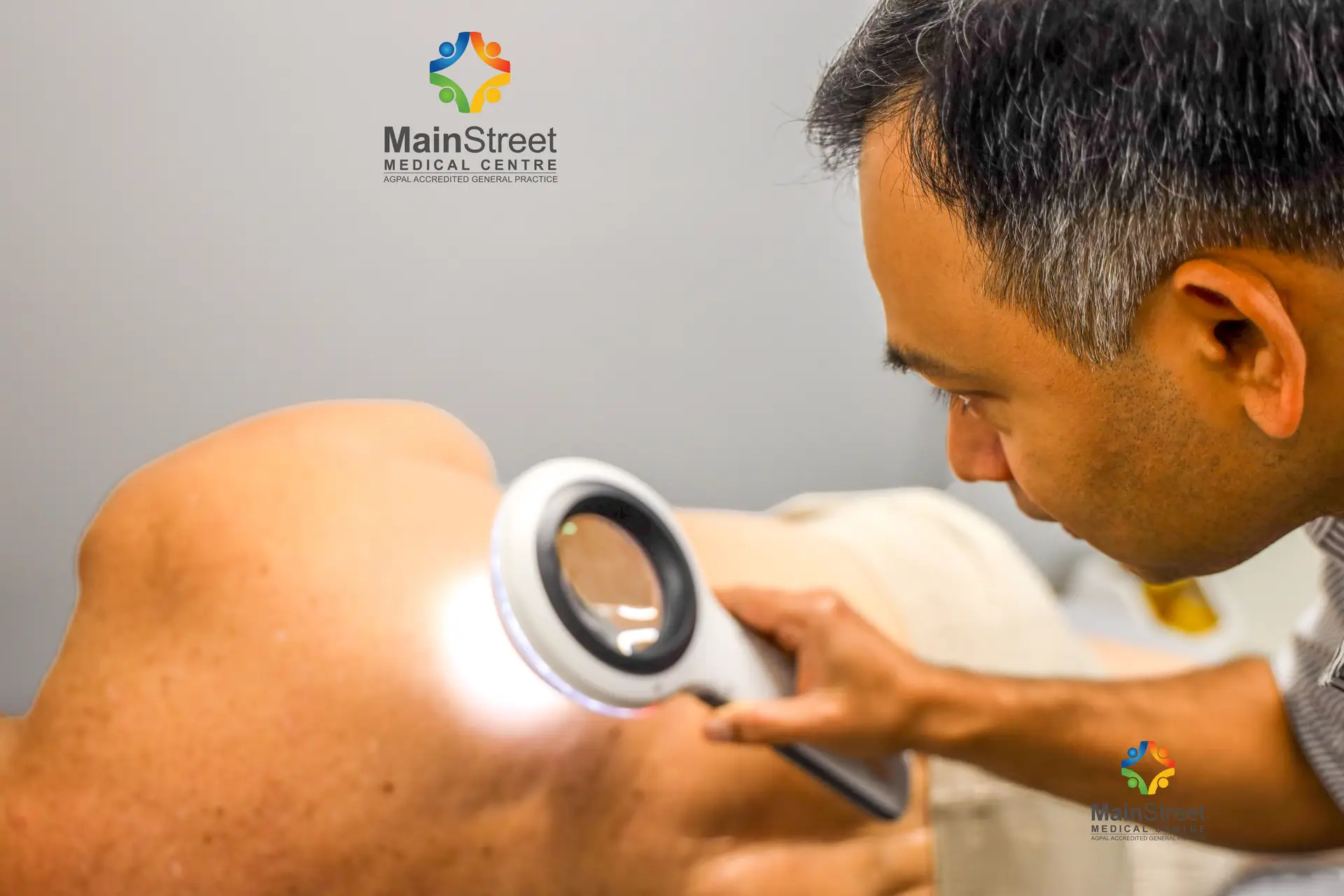
2. Head-to-toe examination. You change into a gown in private, and only the area being examined is uncovered at any time. The doctor works systematically over your entire skin surface with a dermatoscope, including the spots people miss on their own — the scalp, behind the ears, the back, between the toes and the soles of the feet.
3. Imaging, if anything needs watching. If a lesion looks doubtful, it can be photographed through the dermatoscope so its exact size, colour and structure are on record for next time. A spot that has genuinely changed between visits declares itself — which means fewer unnecessary procedures and fewer missed problems.
4. Results and a plan, on the day. There is no waiting for a letter. Your doctor explains what was found before you leave: most people simply hear that everything looks fine and when to come back. If something does need attention, the options — monitoring, a biopsy or excision, or cryotherapy — are talked through, along with any costs, before anything is booked.
The tools your doctor uses
Skin checks at Main Street Medical Centre are performed by a team of GPs with additional training in skin cancer medicine, including Dr Nadeesh Seneviratne, who holds a Master of Medicine in Skin Cancer from the University of Queensland.
How often should you be checked?
It depends on your skin, your history and your sun exposure — many Queensland adults choose an annual full skin check, while people at higher risk are often advised to come more frequently. Your doctor will recommend an interval at the end of your first check. For a detailed breakdown by risk level, see our guide: How often should you have a skin check in Queensland?
Warning signs between checks
A skin check once a year does not replace knowing your own skin. Between appointments, keep an eye out for a spot that is asymmetrical, has an irregular border, shows multiple colours, is larger than 6mm, or is evolving — changing in size, shape, colour or elevation. A sore that does not heal, or a mole that itches or bleeds, deserves an appointment promptly rather than waiting for your next routine check. Our ABCDE self-check guide shows you exactly what to look for.
Frequently asked questions
Is a full skin check really bulk billed?
Do I have to undress completely?
How long does the appointment take?
What happens if the doctor finds something?
Do I need a referral?
Book a full skin check in Hervey Bay
Main Street Medical Centre is at 71 Main Street, Pialba — open Monday to Friday, 7:30am to 5:30pm, with free parking at the rear. Full body skin checks are bulk billed for eligible Medicare card holders.
This article is general information and is not a substitute for individual medical advice.
Last reviewed September 2026